Tuesday, July 22, 2014

Time Scanners explore Petra

Recently, the PBS program Time Scanners traveled to modern day Jordan to explore what remains of the ancient city of Petra. On the ground, a team of laser-scanning experts set about trying to unlock the secrets of how several of the structures were built thousands of years ago.

Petra, a famous ancient city of the Levant founded by the Nabataeans, was immortalized in popular culture in Indiana Jones and the Last Crusade (1989). In the background of the below picture, one can see brilliant temple carvings that were etched right into the rock face.

For years, researchers, historians, and archeologists considered that the rock face carvings may have been done by stone carvers hanging from the cliff face. But, having scanned several different structures, researchers with Time Scanners concluded that the temple faces were probably built with the aid of stone steps cut into the cliff that were eventually cut away to reveal the stone structure.
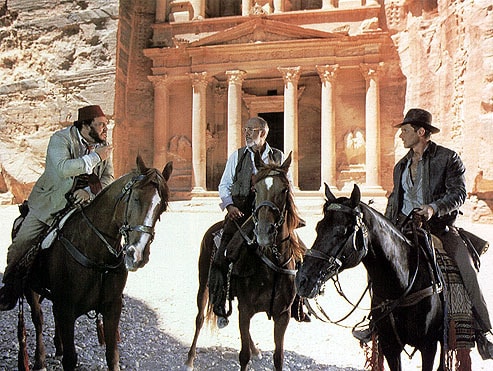

While Petra may not be the final resting place of the Holy Grail, as depicted in The Last Crusade, it was a very important ancient city. Petra was a desert oasis for many travelers and traders throughout the Levant and the broader region. The Nabataeans had learned to channel and control the region's most important resource: water. Running through channels and the world's first lead pipes (yes, pipes!) the water quenched the thirst of city-dwellers and travelers alike, and made Petra a premier trading spot.

A preview of the Time Scanners episode exploring Petra can be seen  below.


Saturday, May 10, 2014

New theory about Hanging Gardens

This is the premier post of World History in 250 Words, a blog that is aimed at explaining the great ideas and events that have shaped the world in short, easy-to-understand posts. For this first post, we'll look back to the ancient Babylonians, and the lost ancient wonder known as the Hanging Gardens.

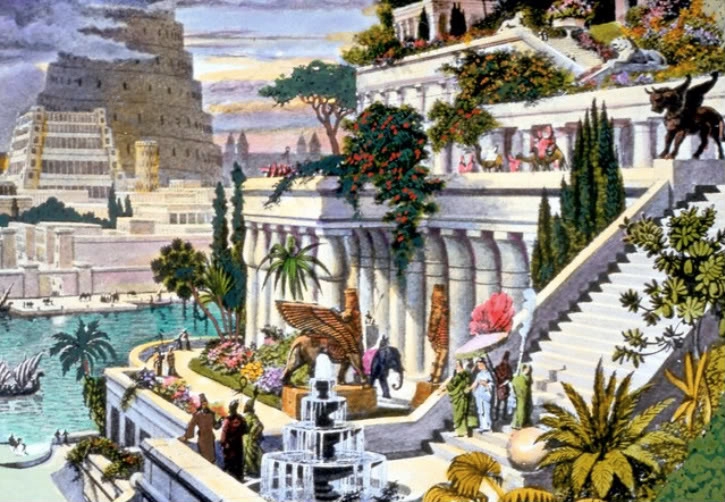
The Hanging Gardens of Babylon (Sennacherib?)
Photo from Wikipedia
Historians and archeologists have long-believed that the Hanging Gardens were built by Nebuchadnezzar II (c. 605 BC - 562 BC), but new archeological evidence suggests that the gardens may have been located elsewhere.

In a recent episode of PBS's Secrets of the Dead entitled "The Lost Gardens of Babylon," Dr. Stephanie Dalley suggests that the lost ancient wonder may have in fact been located far north of Babylon in Sennacherib, near the ancient city of Nineveh.

The evidence offered up in the episode is compelling and shows how a series of canals and aqueducts (predating Roman designs) fed water to Sennacherib, which made it a likely candidate to house the Hanging Gardens. While hard-and-fast evidence for the gardens remains scant, the latest theory/evidence is at least thought-provoking. A preview of the episode can be seen below, and the full episode can be viewed on PBS's website.